Feature · Travel
The Shikumen of Shanghai
Traditional architectural enclaves in Shanghai that have resisted modernization.
Jon DeHart·The Ritz-Carlton Magazine
Traditional architectural enclaves in Shanghai that have resisted modernization.
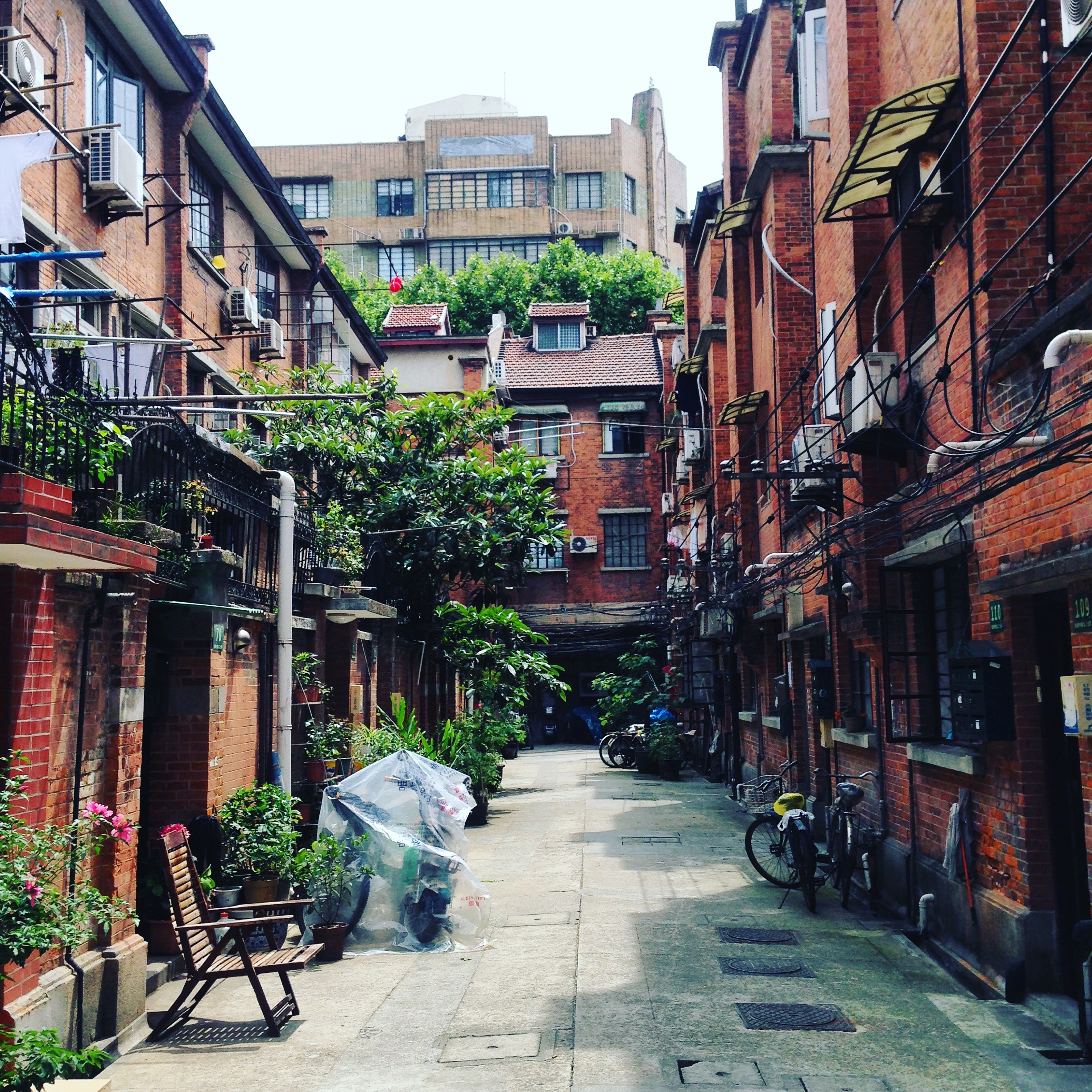
Shikumen lane houses in Shanghai's former French Concession. Photo: Bernessaw / CC BY-SA 4.0
Beyond a weathered stone arch that opens onto an alley off Maoming Road in the heart of old Shanghai, a man in his late 60s takes my order. "Do you want that with tomatoes or sausage?" he asks. Vainly scanning a menu plastered on the wall and scrawled in red Chinese characters, I opt for tomato, unsure how it will taste with fried rice but curious to try. He fires up a portable burner on a countertop under a translucent plastic roof, splashes oil into the pan and starts chopping.
His wife seats my local friend Sally and me at one of three tables squeezed into a room that opens directly onto the old-school residential lane, known as a lilong or longtang. "This is actually their house," Sally tells me. This is confirmed when I request water and the woman opens the door next to our table to grab a bottle from the living room just beyond. "My grandparents have a cupboard like that one," Sally adds, pointing at a dark wooden cabinet hanging from the wall, filled with porcelain bowls, plates, chopsticks and spoons. A table beneath it holds a rice cooker and two electric kettles that look as if they were made in the 1960s.
As we wait for lunch to arrive, a stylish young couple walking their golden retriever stops on their way home to chat with the older couple, who take orders from two more customers, one who joins us in the dining room and the other who plops down at a table outside. Our food appears — noodles in hot soup with a fried egg for Sally, and a heaving bowl of fried rice tossed with green onions and tomatoes for me (a surprisingly good combination).
Finishing our food, satisfied, we pay the bill (about $3.50) and thank the smiling couple. Walking past one-speed bicycles leaning against walls and drying laundry flapping in the breeze, we pass back under the elegantly crumbling archway and emerge onto the street outside. A steady flow of honking cars and motorbikes whirs past, and, like that, the spell is broken. We are back in modern Shanghai.
"There's really nothing quite like a classic Shanghai-style lane neighborhood — a unique combination of privacy and public transparency at the same time."
So says Patrick Cranley, president and co-founder of Historic Shanghai, a provider of historical and architectural tours of the city. "They are self-enclosed urban residential blocks designed to create a close-knit community that you feel as soon as you enter. While these lanes are quite hidden, the residents all know each other well — and know each other's family affairs, like it or not!"
While the old and new coexist in many lane communities, development has taken its toll. Landlords, developers and local government have passed through swaths of old Shanghai, leaving a mixed bag of untouched communities, organically evolving neighborhoods and sleekly gentrified projects. Those who have benefited from this push have seen dubious wiring, outdated plumbing and shaky staircases spruced up. But just as many have been forced from their homes in the name of renewal. Increasingly, these timeworn neighborhoods, so emblematic of Shanghai, face an uncertain future.
The full feature goes deeper into the history and architecture of the shikumen, inside the lanes of Jing'an Villa and Tianzifang, and the fierce debate over what "preservation" really means in a fast-changing city.
Continue reading at The Ritz-Carlton Magazine →