Culture & Politics
Storytelling, Cultural Spheres and the Senkaku Dilemma
To what extent could a shared cultural sphere overcome bitter disputes and heal wounds from East Asia's past?
Jon DeHart·The Diplomat
To what extent could a shared cultural sphere overcome bitter disputes and heal wounds from East Asia's past?
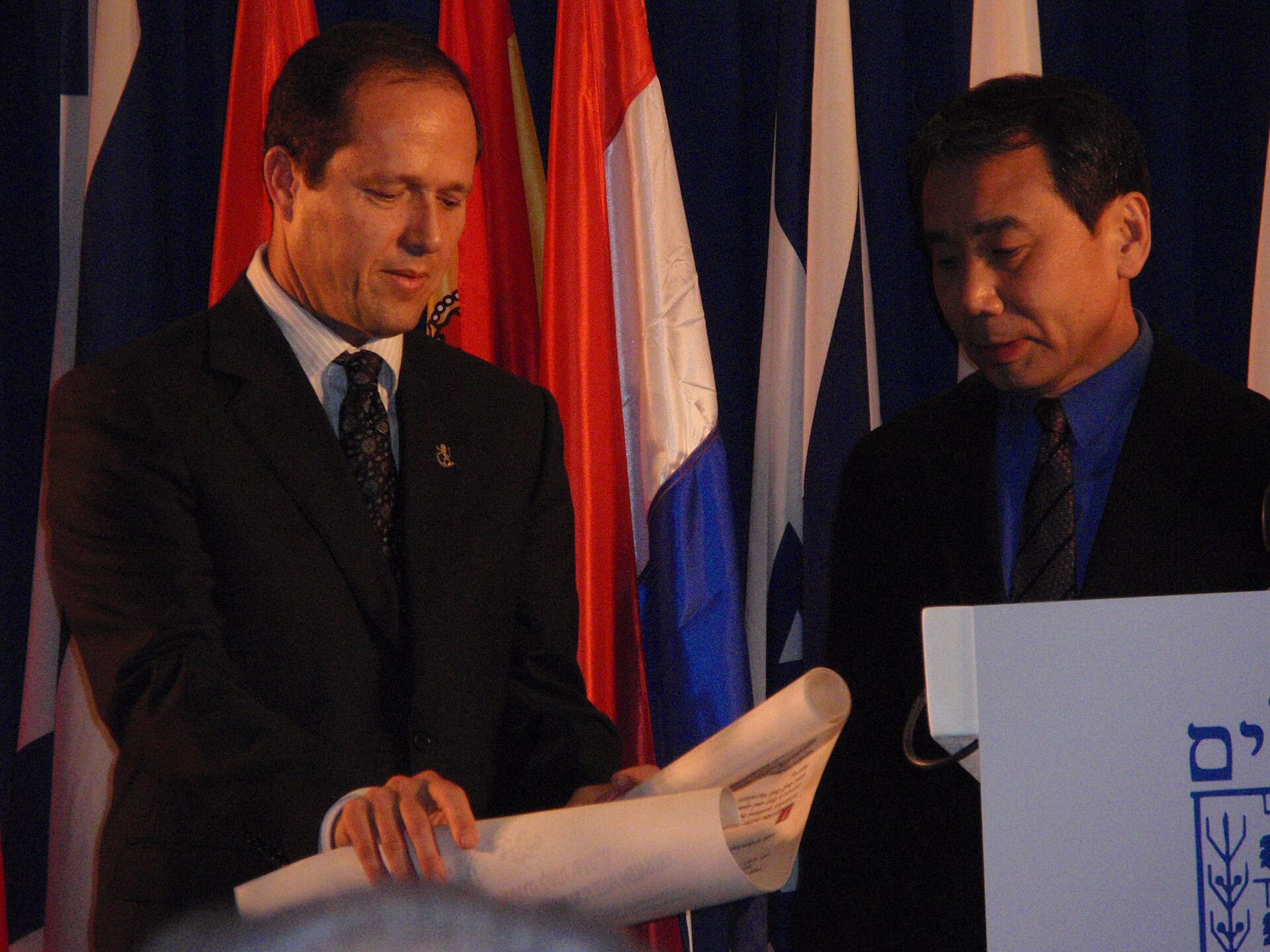
Novelist Haruki Murakami, whose 2012 op-ed opens this piece, at the Jerusalem Prize. Photo: Galoren.com / CC BY-SA 3.0
In September 2012, internationally acclaimed Japanese novelist Haruki Murakami penned a heartfelt op-ed in the Asahi Shimbun. His purpose was twofold: to praise the strides made in East Asia towards a regional shared cultural sphere, and to express regret at hearing that books by Japanese authors were being pulled from shelves in China.
He started with the good: "'The East Asian cultural sphere' is steadily maturing into a rich, stable market. A large number of people today have access to and enjoy music, literature, movies and TV programs at equivalent value and without restriction within the market. It is a splendid achievement indeed."
Splendid though this may be, historical trauma and the politics of the day remain a barrier that seems to continually prevent East Asia's artists, writers, musicians and filmmakers from creating a truly shared cultural space. Any headway made in easing tensions always seems to be offset by the sudden appearance of Chinese ships or the next official visit to Japan's Yasukuni Shrine.
Murakami likened the nationalist sentiment predictably whipped up in the wake of such events to "getting drunk on cheap alcohol."
"Cheap alcohol can get a lot of people drunk… After raising a noisy clamor, however, they only find themselves left with a terrible headache the following morning."
Could a shared East Asian cultural sphere, even in a small way, help the region sober up and recover from this historical hangover? While cultural exchange may not be a panacea, ample case has been made that the arts help bind us emotionally to those we may otherwise fear — "the other" — by putting us in touch with their shared humanity.
"I would stress that reconciliation among nations, individuals, and tribes of all kinds is the most important effort we need to undertake today," Frank Stewart, editor of Manoa: A Pacific Journal of International Writing, told The Diplomat. There is a growing chorus of East Asian voices gradually bridging the region's psychological chasm. With any luck, their creative work may bring about a larger shift in consciousness — forming a bridge. Or, as Murakami called it: "a path for souls to travel."
The full essay traces the region's pan-Asian past and present — from sushi on Midwestern menus to the Hallyu wave, the secret of Murakami's cross-border appeal, and the fragile, easily broken bridges being built between Japan, China and Korea.
Continue reading at The Diplomat →