North Korea · Society
'Pyonghattan': Meet North Korea's Nouveau-Riche
The emergence of a newly moneyed class means more Pyongyang residents have money to burn. But appearances can deceive.
Jon DeHart·The Diplomat Magazine
The emergence of a newly moneyed class means more Pyongyang residents have money to burn. But appearances can deceive.
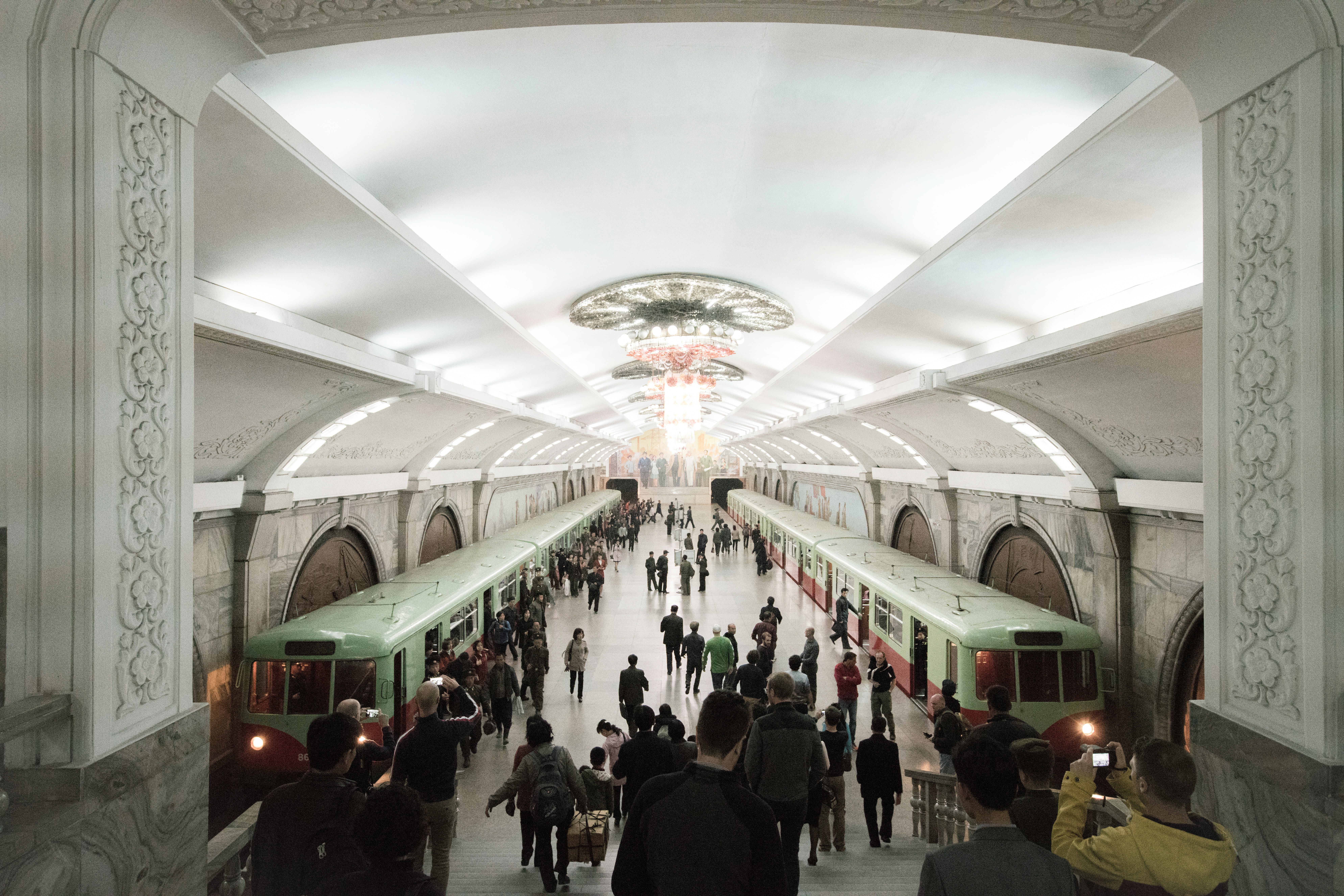
The Pyongyang Metro. Photo: Random Institute / Unsplash
"Let us turn the whole country into a socialist fairyland!" This was one of North Korea's official slogans for 2015. And despite Kim Jong-un's ruthless international image — marred by failed missile tests and political executions — the luxury-loving dictator means business when it comes to bringing leisure to the masses.
Since taking office in December 2011, Kim has ordered the construction of a water park, a 4D cinema, a dolphinarium, riverside parks, residential skyscrapers, a new airport terminal and an underground shopping mall, The Economist notes. Brand-name clothing outlets, restaurants serving international cuisine, cappuccinos and gym memberships are also on offer in the DPRK today.
This visible spike in consumerism "is one of the most striking changes in Pyongyang in the last few years," an insider who has visited numerous times told The Diplomat on condition of anonymity.
"In recent years it has become OK to show that you have things and wealth. It is socially acceptable to be aspirational in the material field."
This alternate reality springing up in the DPRK today, where some 3 million citizens now wield cell phones, has been coined "Pyonghattan." Its inhabitants are known as donju ("masters of money") — nouveau-riche residents making money thanks to the emergence of an unofficial economy.
"Who is participating is a complex issue," Stephan Haggard, professor of Korea-Pacific Studies at UC San Diego, told The Diplomat. "It appears that the regime is relaxing the space in which market activities are allowed… Moreover, it appears that there is probably a secondary financial system emerging under the radar. All of these are signs that the scale of what we call 'marketization from below' has increased." In other words, marketization at the grassroots level.
The full feature tours the donju's world of nail salons, Zara, $9 iced mochas and $48 steaks — set against a country where the official salary is $10 a month — and asks whether it signals real opening, or a thin veneer over a still-belligerent state.
Continue reading at The Diplomat →