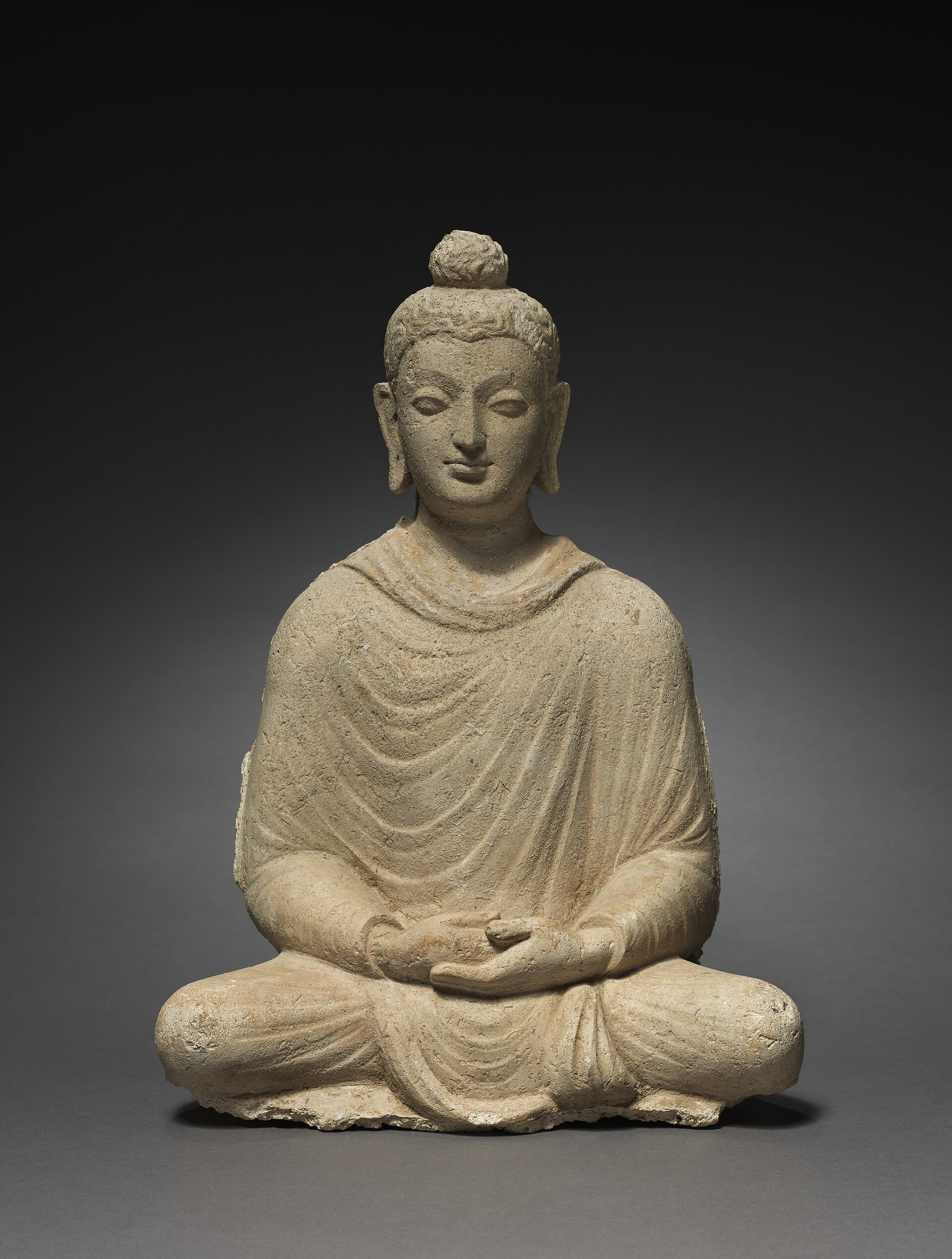
Outside the village of Mes Aynak, in eastern Afghanistan's mountainous Logar province, a burgeoning Buddhist center once flourished. In its heyday, this Silk Road hub thrived on trade between the Middle East and Asia, and hosted Buddhist pilgrims who helped spread the faith. While Europe was crawling through the Dark Ages, Afghanistan was home to Nestorian Christians, Persian Zoroastrians, Hindus, Jews and, finally, Muslims, in a tolerant, prosperous society.
The 2,600-year-old site contains fortified monasteries, a Zoroastrian fire temple, several Buddhist stupas, more than 1,000 statues and walls featuring frescoes of donor portraits and scenes from the Buddha's life — not to mention smelting workshops, miners' quarters, a mint, two small forts, a citadel, and a stockpile of Kushan, Sassanian and Indo-Parthian coins.
Today, this treasure trove stands at a crossroads. To illustrate the stakes, documentary filmmaker Brent Huffman asks us to imagine the scene at another site of similar value: Machu Picchu, cloaked in fog at dawn, the fog slowly lifting to reveal an enormous ancient city perched on the edge of a mountain.
"Now imagine the menacing sound of bulldozers closing in… the deafening blow of multiple explosions as Machu Picchu is razed to the ground."
"Be at ease," Huffman adds. "Machu Picchu is a UNESCO-protected site. But a very similar 2,600-year-old Buddhist site in Logar province, Afghanistan, isn't so lucky." His visualization is no exaggeration. In 2007, the Chinese state-backed China Metallurgical Group paid $3 billion to the Afghan government — its largest contract ever — for mining rights to Mes Aynak ("little copper well"), which contains an estimated $100 billion worth of copper. To reach it, the firm plans to dig a 500-meter-deep crater that would effectively wipe the archaeological treasure off the map.
At present, excavation is only 10 percent complete, and the bulk of the more significant findings would traditionally emerge in the remaining 90 percent — work that would take an estimated 25 to 30 years. The mine, meanwhile, is slated to begin shortly. For now, Mes Aynak has received a stay of execution. "All the bad publicity plus logistical problems are holding up the Chinese project to an extent," Huffman told The Diplomat — though he acknowledged that keeping the project at bay is no long-term solution.
This is an excerpt
The full feature follows the site's turbulent modern history — looters, al-Qaeda, Taliban IED threats against the archaeologists — and weighs an impossible question: a war-torn nation's need for jobs and revenue against the irretrievable loss of its cultural heritage.
Continue reading at The Diplomat →