Heritage · Culture
Forbidden Ink: Japan's Contentious Tattoo Heritage
As fashion and social context evolves, could attitudes towards tattoos change in the country?
Jon DeHart·The Diplomat
As fashion and social context evolves, could attitudes towards tattoos change in the country?
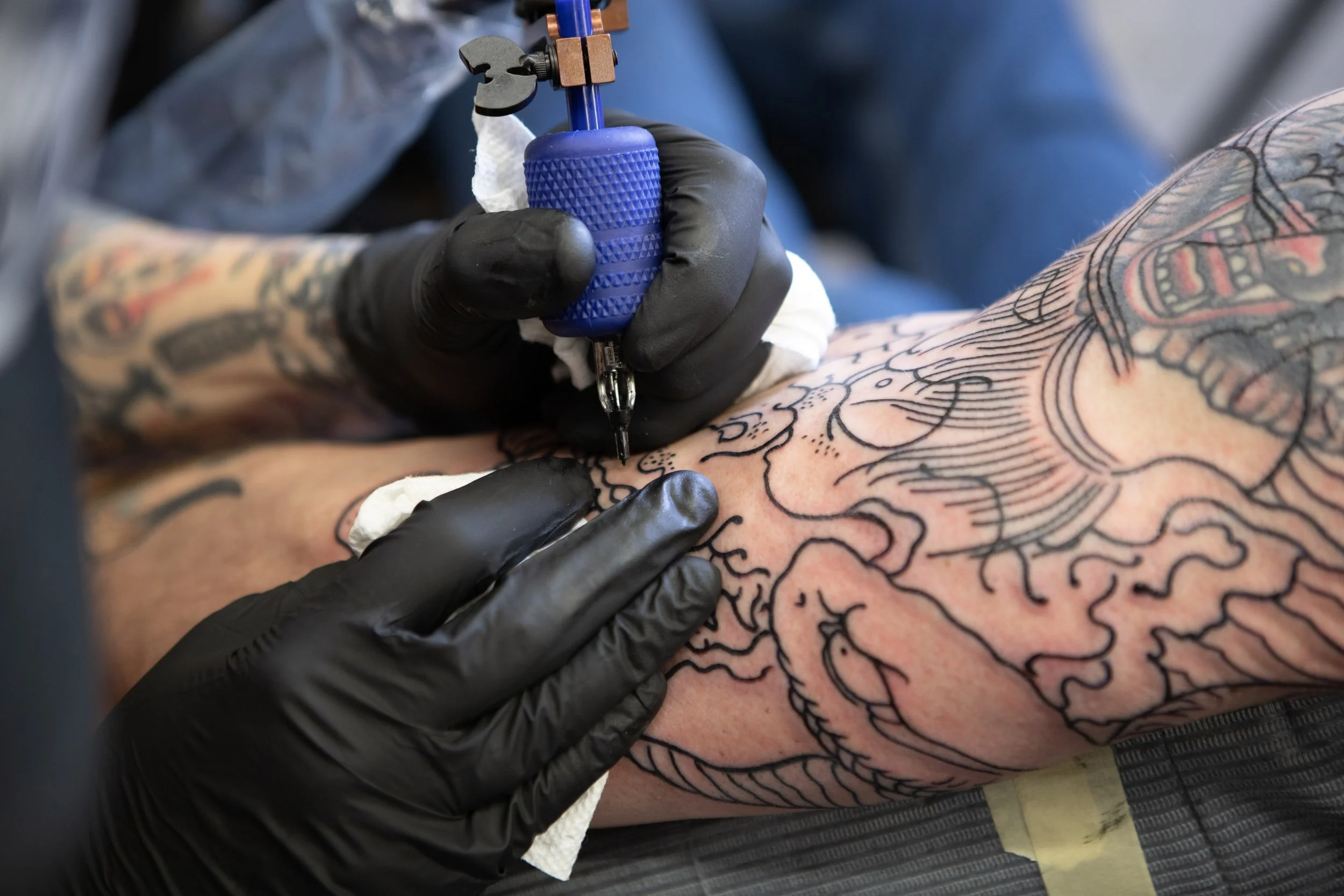
From starkly rendered waves crashing over a shoulder to a stern samurai warrior wielding a sword on one's back, the striking designs expressed in Japanese tattoos are among the most iconic in the world of ink.
The fact that Japanese tattoos have received "recognition in such major Western art museums as the musée du quai Branly in France and general popularity among tattoo enthusiasts abroad are surely a testament to their enduring appeal," John Skutlin, a PhD candidate in the Department of Japanese Studies at the Chinese University of Hong Kong, told The Diplomat.
Beyond the popular motifs of colorful koi and cherry blossoms mingling with tigers and dragons, tattoos also have deep roots among Japan's indigenous Ainu people, as well as natives of Okinawa. Ainu women, living mostly on the northern island of Hokkaido, have long etched designs onto their faces and arms using soot from the fireside, to keep evil spirits at bay and ensure a safe transition to the afterlife. And in Okinawa, it was also the women who traditionally marked their hands with a mix of ink and a strong local brew called awamori. Their tattoos served as talismans and had strongly shamanic undertones.
Yet despite Japan's rich history of tattooing, the painstaking art form has never achieved mainstream acceptance on the islands. There are complex historical reasons for this. Further, there are fundamental differences between Japanese tattoos (irezumi — literally, "insert ink") and their Western counterparts.
If one was to commit to a proper ink job in Japan, it could mean going as far as getting a full-body suit, extending from the back to the legs, arms, and chest. This would usually end at the neck, wrists and ankles so that "the ink could be shown when occasion permitted it," Skutlin said. "It's quite similar to Tanizaki Jun'ichirō's Japanese aesthetic as described in In Praise of Shadows — gold-leaf images, lacquerware and folding screens that, in bright light, are gaudy and even blinding, but when seen in the murky candle-lit dimness of a temple, a mysterious, mystical kind of beauty is revealed."
"Whether by modern electric needle or traditional tebori, a full-body canvas can take up to five years to complete."
Sitting under the needle for this amount of work is no light matter. The commitment involves weekly visits to a tattoo studio and fees in the tens of thousands of dollars. Furthermore, refining the design is a collaboration between artist and client, and the tattooist has the right to refuse service if their visions do not align.
Once a deal is struck between artist and customer, the ordeal begins. Charles "Didjelirium" Perez, a Tahitian documentary filmmaker focused on tattoos, described the method of tattooing by hand (tebori) as being akin to "some sort of warrior-style initiation one has to undertake to become a man, which is often what tattoos were back in tribal times."
The full feature traces irezumi from the woodblock prints and Suikoden craze of the Edo period to the yakuza, the Western sailors and dignitaries who sought it out, MacArthur's postwar reforms — and why, despite acclaim abroad, tattoos remain taboo in Japan's baths and hot springs today.
Continue reading at The Diplomat →