In Memoriam
Donald Richie: 1924–2013
Donald Richie, American writer on Japan, mentor and humanist, has died at 88.
Jon DeHart·The Diplomat
Donald Richie, American writer on Japan, mentor and humanist, has died at 88.
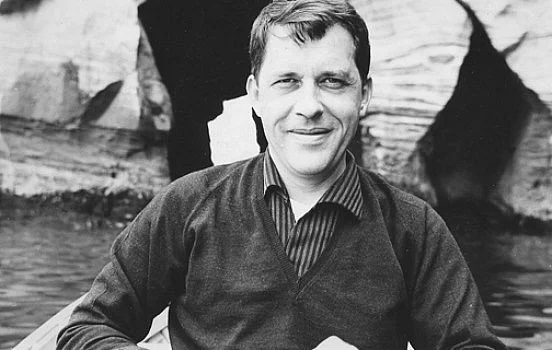
Donald Richie (Stone Bridge Press)
The passing of Donald Richie — writer, painter, filmmaker and Tokyo flâneur — marks the end of an era. Richie, who died Tuesday in Tokyo, was far and away the West's foremost interpreter of things Japanese. American author Tom Wolfe called him "the Lafcadio Hearn of our time."
Born April 17, 1924, in the small Midwestern town of Lima, Ohio, Richie first arrived in Japan in 1947, as a 22-year-old typist with the Allied Occupation forces. His eyes were soon opened to the country he would choose to call home for most of his life. "If I had stayed in Lima, Ohio, I think my life would've been endless, like two thousand years," he told Kyoto Journal in 1999. "But here, everything is so interesting… Everyday you wake up and think 'What am I going to learn today?'"
When he first arrived, the country was in ruins and still seen as the enemy. But Richie found himself driven to understand and connect with Japanese on an individual, human level. "Donald was a great humanist. Though he fraternized with the rich and famous, he wrote about everyman, the invisible. He elevated the ordinary to the extraordinary," Leza Lowitz, a Tokyo-based author, editor and personal friend, told The Diplomat.
"It is, in fact, an injustice to call Richie a writer on Japan; really, he is a writer on artifice and time and death, on being human."
So wrote Pico Iyer in his introduction to The Inland Sea, Richie's classic autobiographical travelogue of a journey through Japan's Seto Naikai. Iyer placed Richie in the company of Graham Greene, Jan Morris, Paul Bowles and Somerset Maugham, adding that he is "most of all… a writer on the particularly modern art of learning how to be a foreigner."
"The only problem with Richie's writing," Iyer continued, "is that it's never been easy enough to find around the world, in part because people, knowing him to be a writer in Japan, assume that he's a writer on Japan. And as a pure, reflective writer of a kind that seems all but antique, he has done nothing to sell himself to the world or to dress himself up with gestures or high concepts."
The full tribute traces Richie's 40 books and his singular role introducing Kurosawa and Ozu to the West, his candid Japan Journals, and the idea at the center of his life and work: that freedom is found only within bounds.
Continue reading at The Diplomat →