Interview · Art
Aida Makoto: Far-Sighted Visions of Near-Sighted Japan
Artist enfant terrible Aida Makoto on his provocative Tokyo exhibition — and whether there is hope for Japan.
Jon DeHart·The Diplomat
Artist enfant terrible Aida Makoto on his provocative Tokyo exhibition — and whether there is hope for Japan.
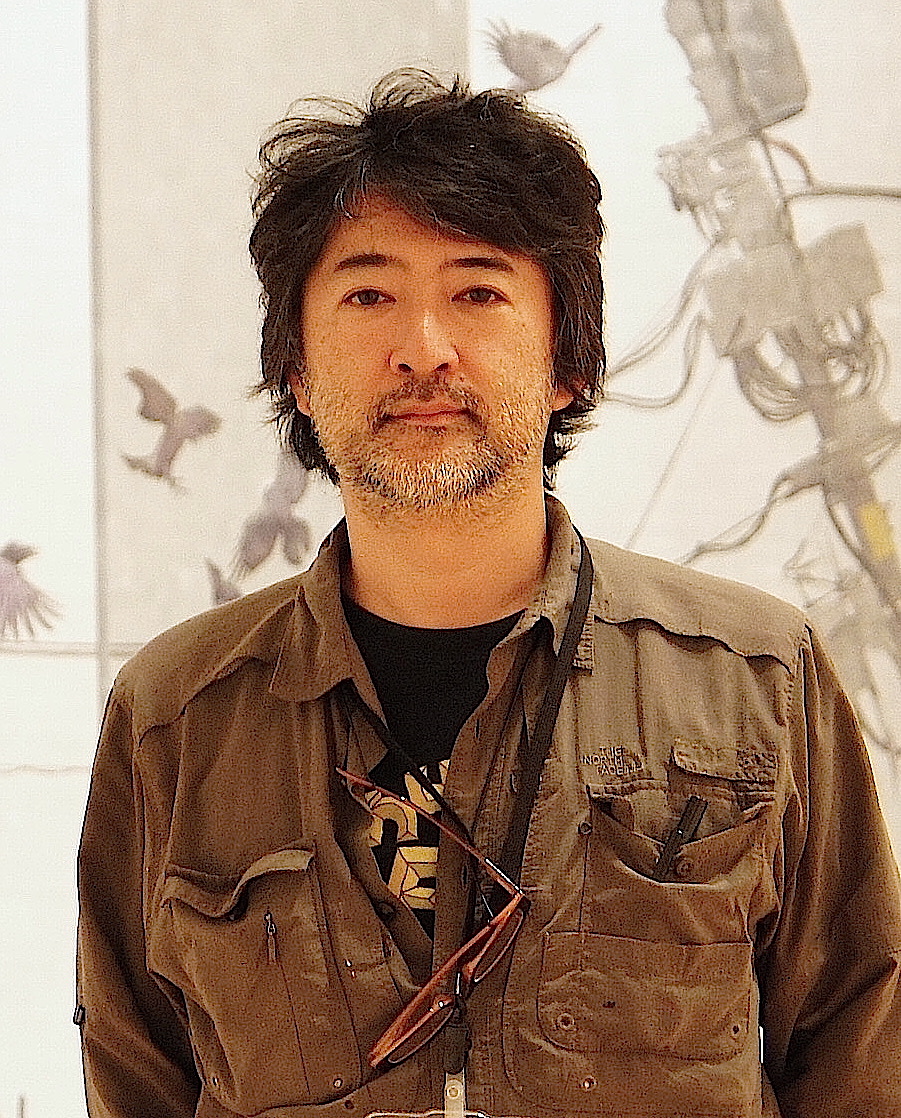
Aida Makoto, the artist profiled here. Photo: Chiou Hsinhuei / CC BY-SA 4.0
Since his highly provocative Monument for Nothing exhibition opened at Tokyo's prestigious Mori Art Museum, Japanese artist Aida Makoto has been generating attention and stoking heated debate. He has been called a rebel, a "hellraiser," and controversial more times than he would like to count.
Among his works are an overtly phallic mushroom cloud drawn in cutesy manga style, a wall plastered with real tweets sent after the 3/11 triple disaster, a sprawling tent filled with ultra-kawaii dolls and pink plastic toys, a suicide machine rigged to fail no matter how many attempts are made, and an apocalyptic scene rendered in the style of a traditional landscape painting.
While these works may suggest a dark, tormented man, in person Aida is down-to-earth, "bearish more than bullish. Many people are surprised to discover this," he told The Diplomat.
"There are so many motifs in my work that could infuriate people, but they only focus on a handful — mostly sexual. I think this reveals an immature society."
Born in Niigata in 1965 to a sociologist father and a science-teacher mother, the young Aida dreamed of becoming a manga artist, often scolded by teachers for doodling in class. During junior high — by which point he was a self-described "leftist" — he became fascinated by WWII and read avidly on the atrocities committed by the Imperial Japanese Army overseas.
At 16 he took up oil painting and devoured literature, with Mishima Yukio at the top of his list, followed closely by Western giants like Dostoyevsky. "When I became a high school student I wanted to be an author. But when I compared whether I was better at writing or painting, it was clearly the latter." Driven by his urge to become "a creator," Aida moved to Tokyo to study oil painting at the Tokyo University of the Arts, and was gradually subsumed by the city's avant-garde.
The full interview moves through Aida's chaotic body of work — Harakiri Schoolgirls, Ash Color Mountains, The Non-Thinker — his ambivalence toward New York and Beijing, and his startling, unpopular prescription for a "near-sighted" nation: that Japan would do well to become humbler, and live with less.
Continue reading at The Diplomat →